Two generations,
Three mediums,
brought together with care.
An exhibition of watercolour and oil paintings by the masters
Gallery: Kian Foundation Pvt. Ltd., Pune
How it came together
Every painting travelled from Pune to Mumbai for the show - moved once, and moved right, before any hanging decision could begin.
With following constraints:
A tribute in the minority
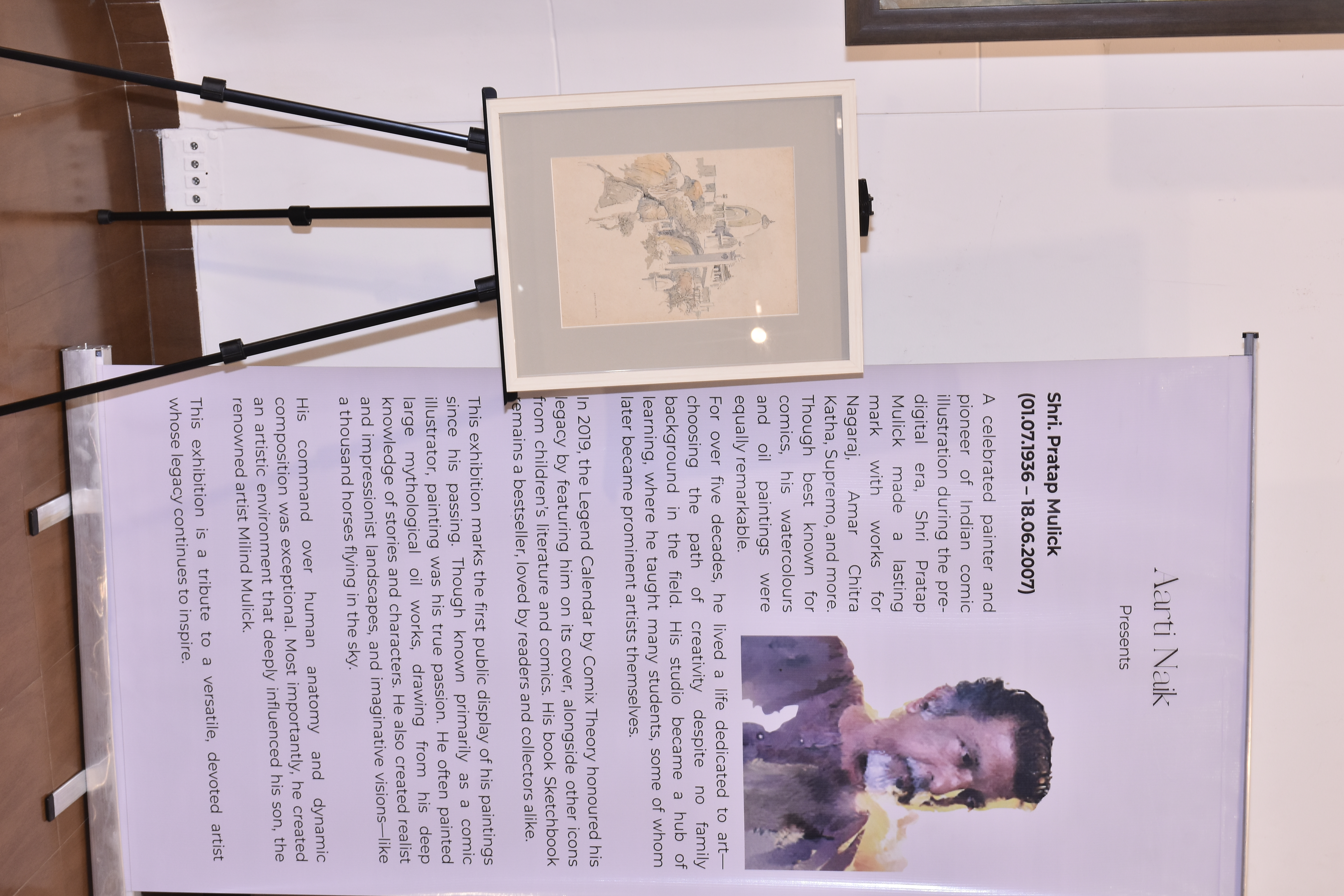
Four works by Late Shri Pratap Mulick against nearly two hundred by his son, in one open hall - no second gallery, and no way to grow a fixed selection.
Work that couldn't be handled twice
Late Shri Pratap Mulick passed away in 2007. His paintings needed conservation and couldn’t be re-hung - position had to be right before anything was lifted.
Five hours, and a show running in parallel
Five hours to install 200 works. Print locked a week out. Kian opening a second show in Mumbai the same dates - no second attempt at any of it.
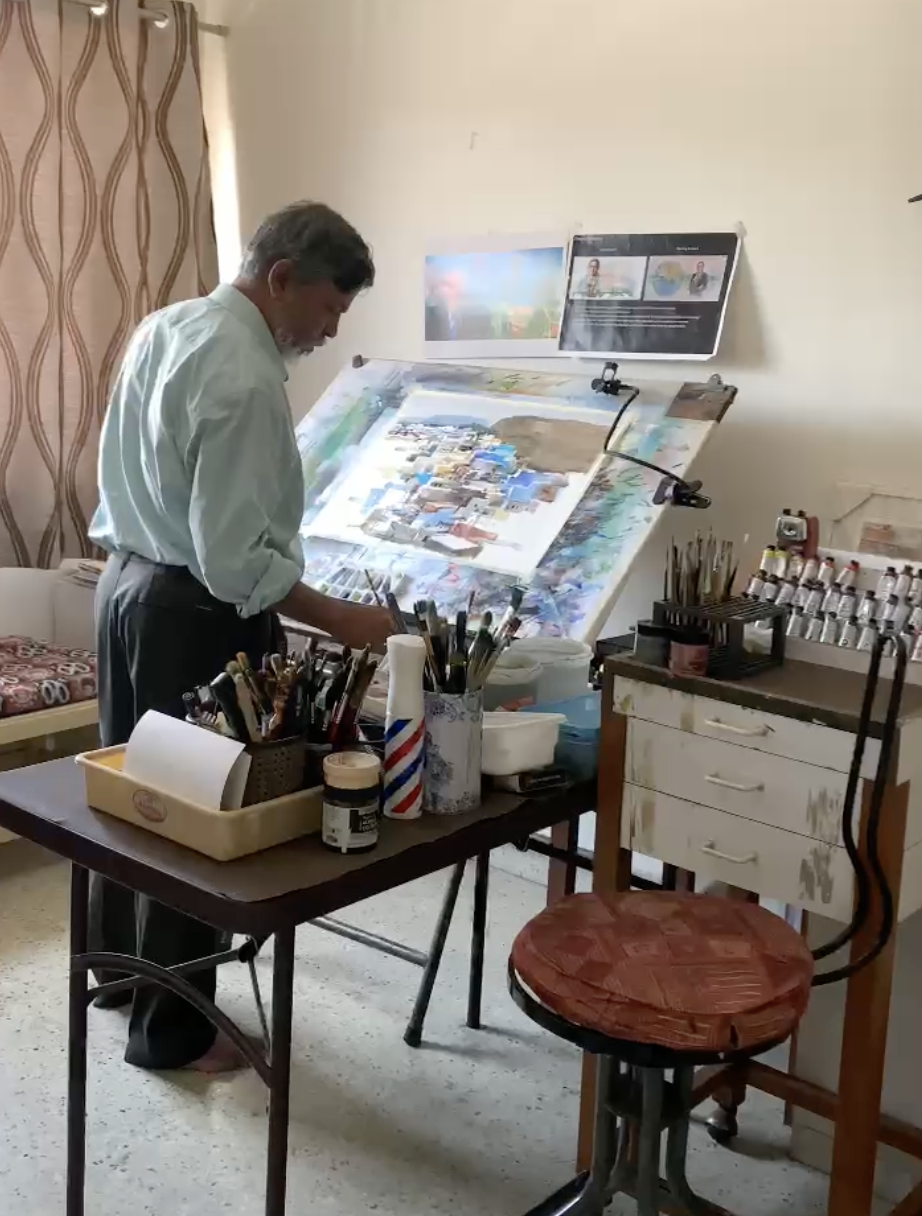
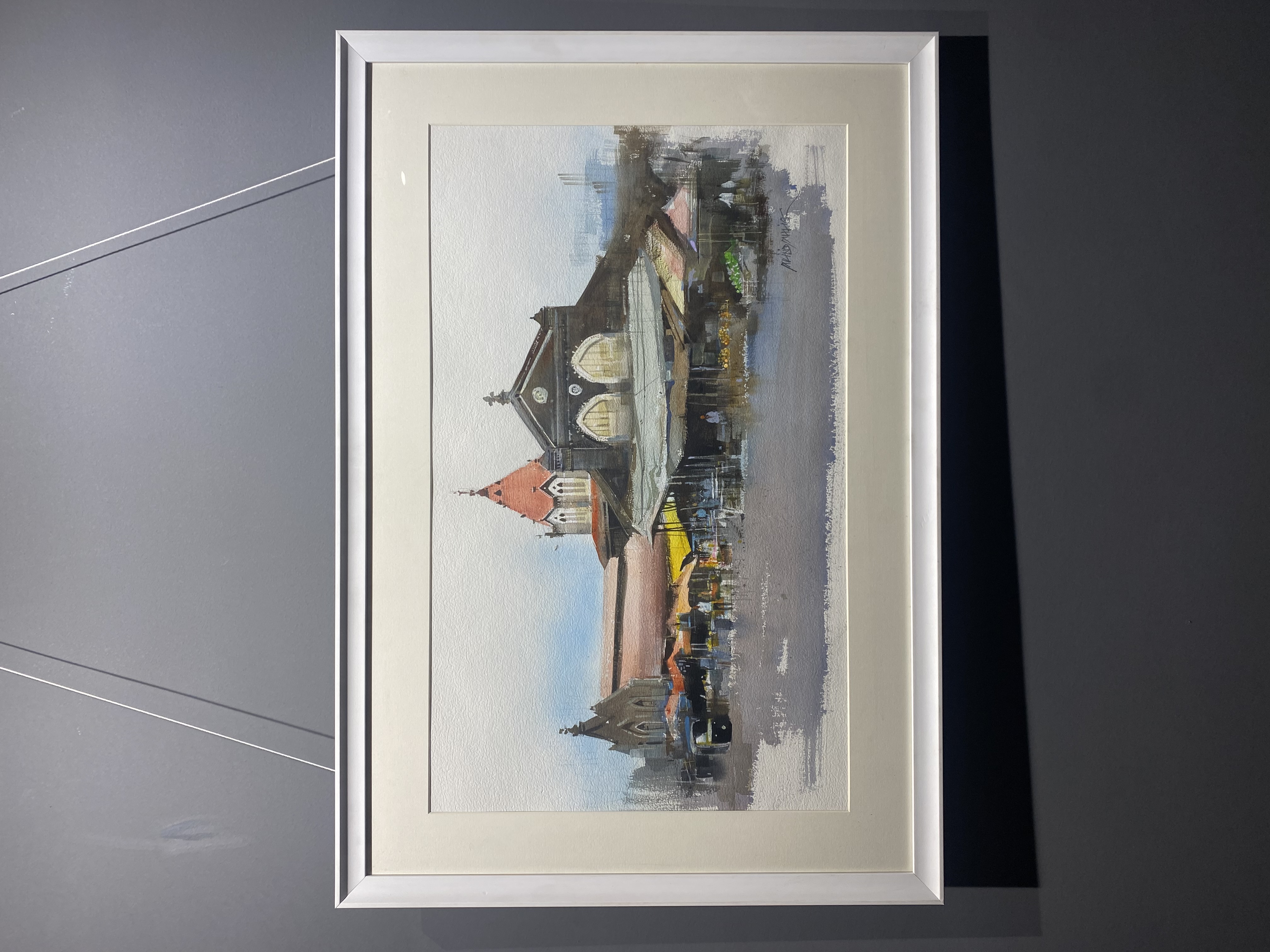
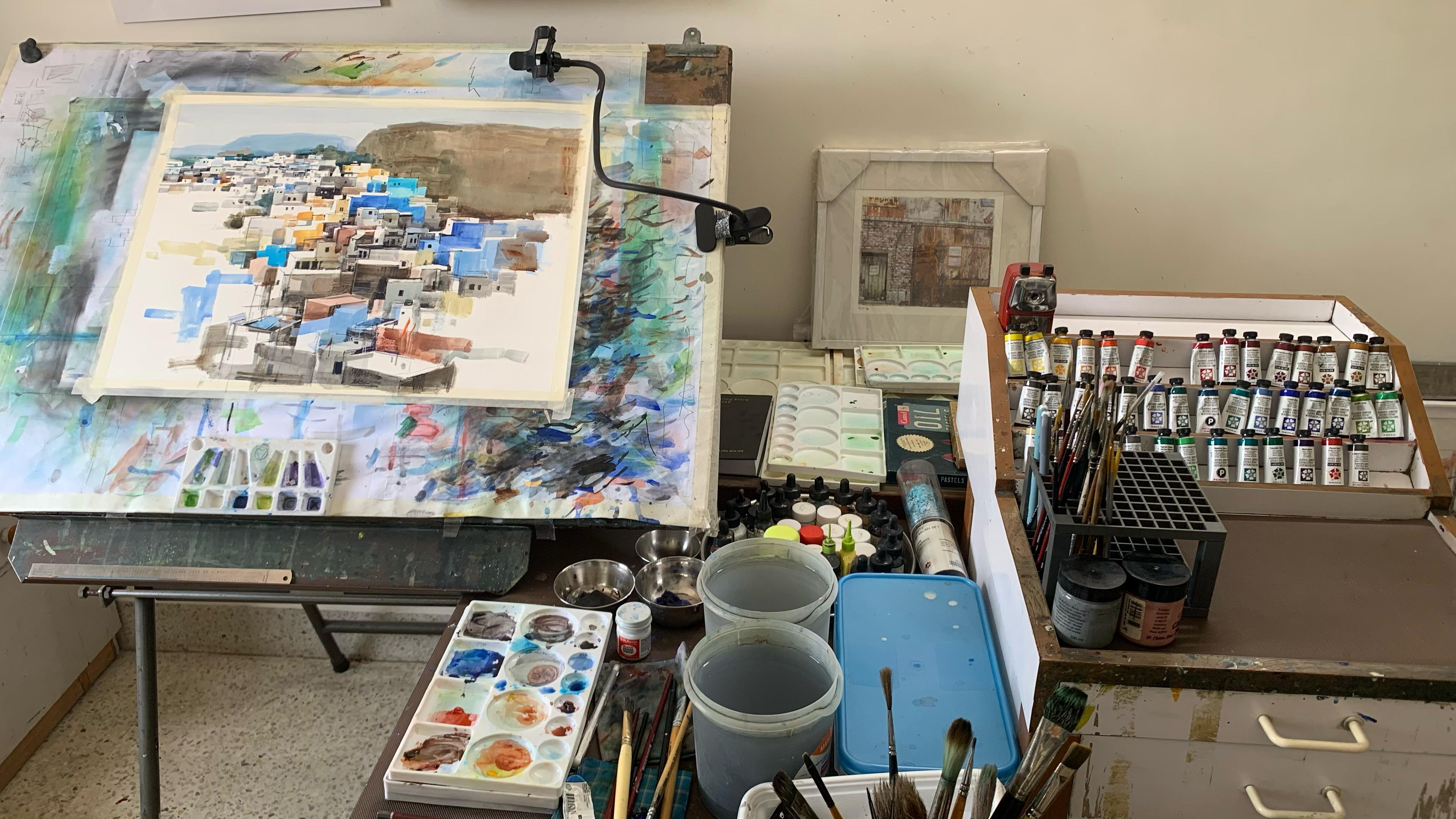
Hanging the show
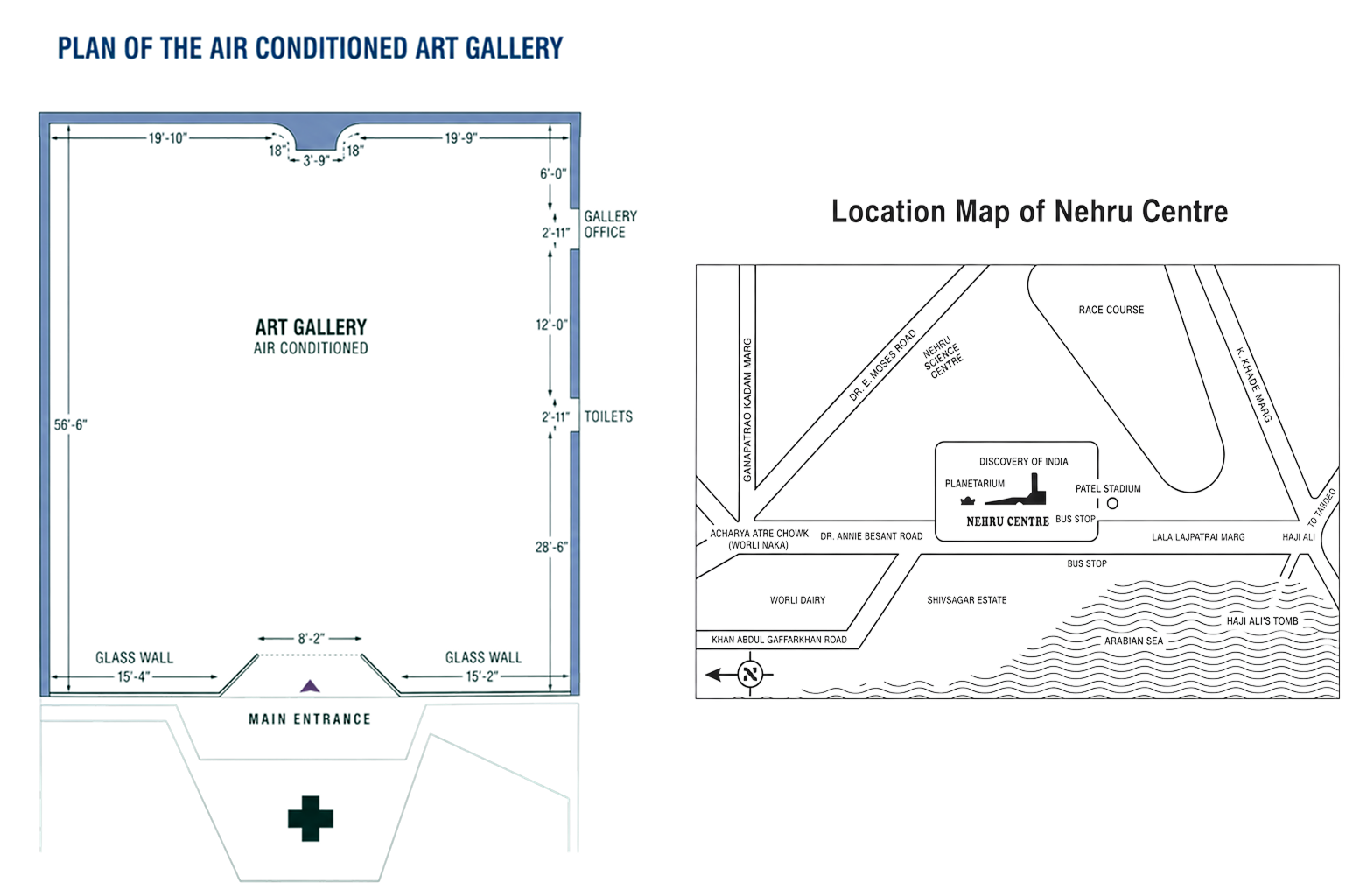
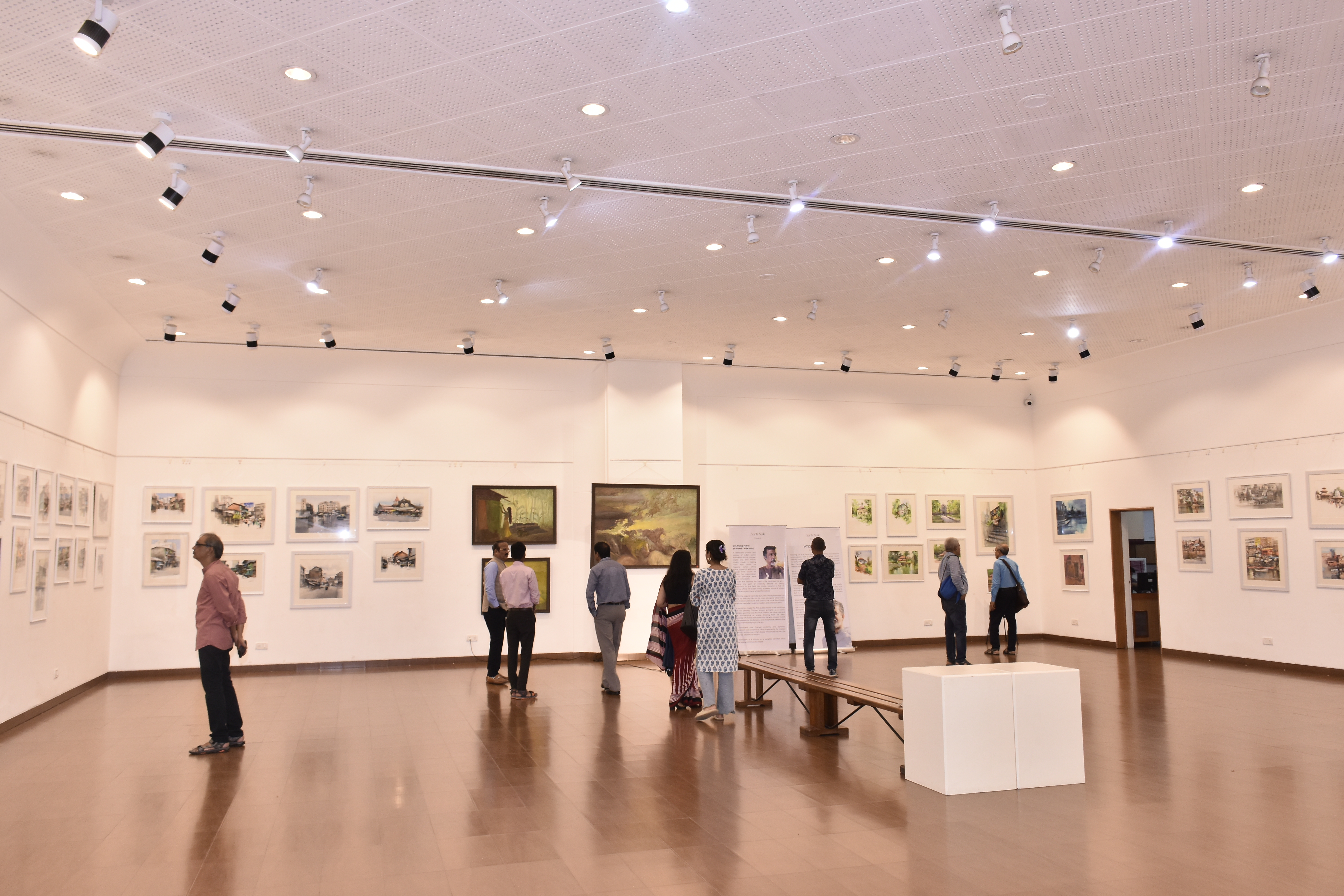
One room. One entrance. Two hundred works.
No corridor, no sequence to enforce. A visitor walks in through the glass walls and sees the full width of the hall at once, they scan, they choose, they move toward whatever catches them first.
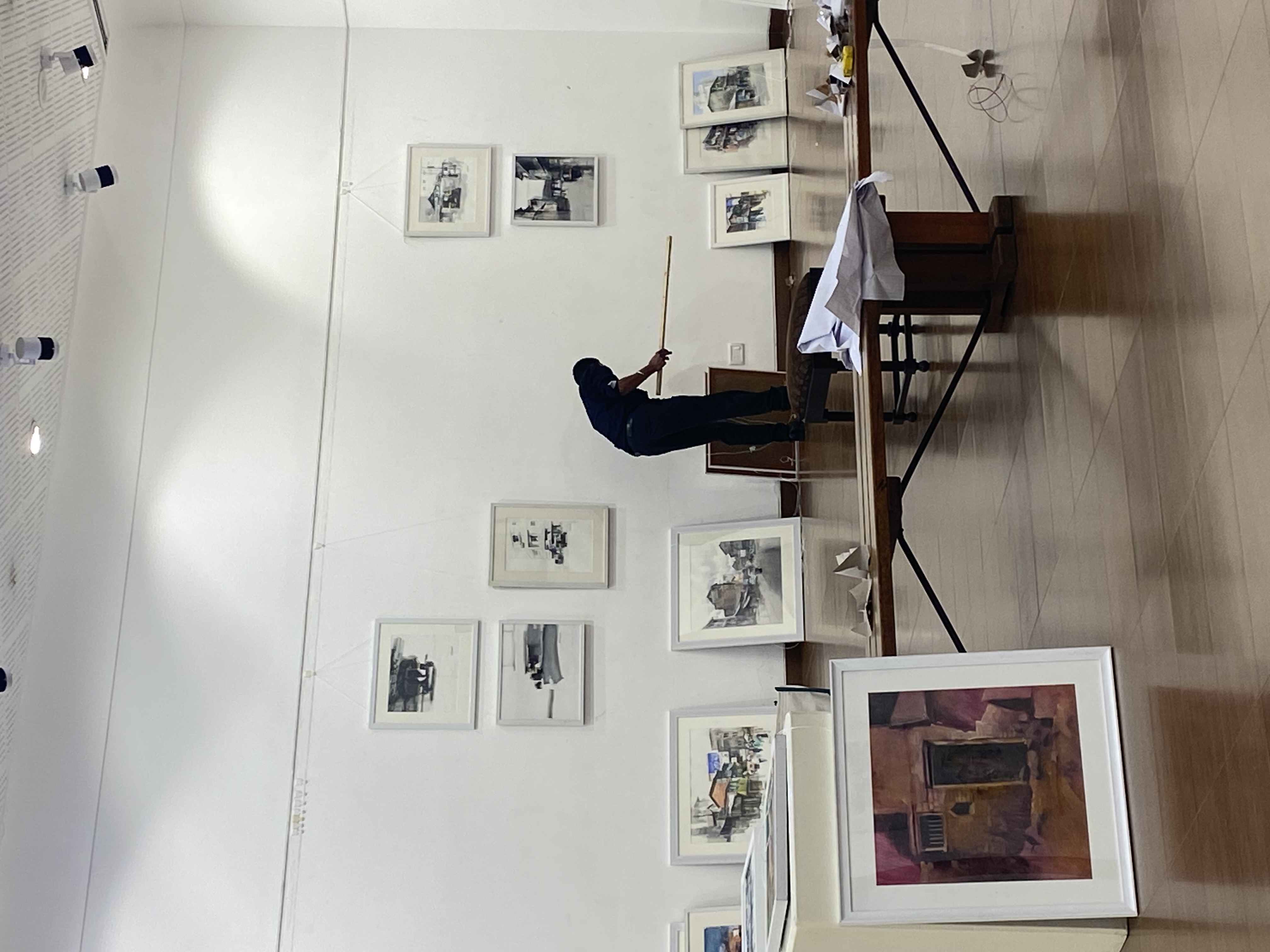
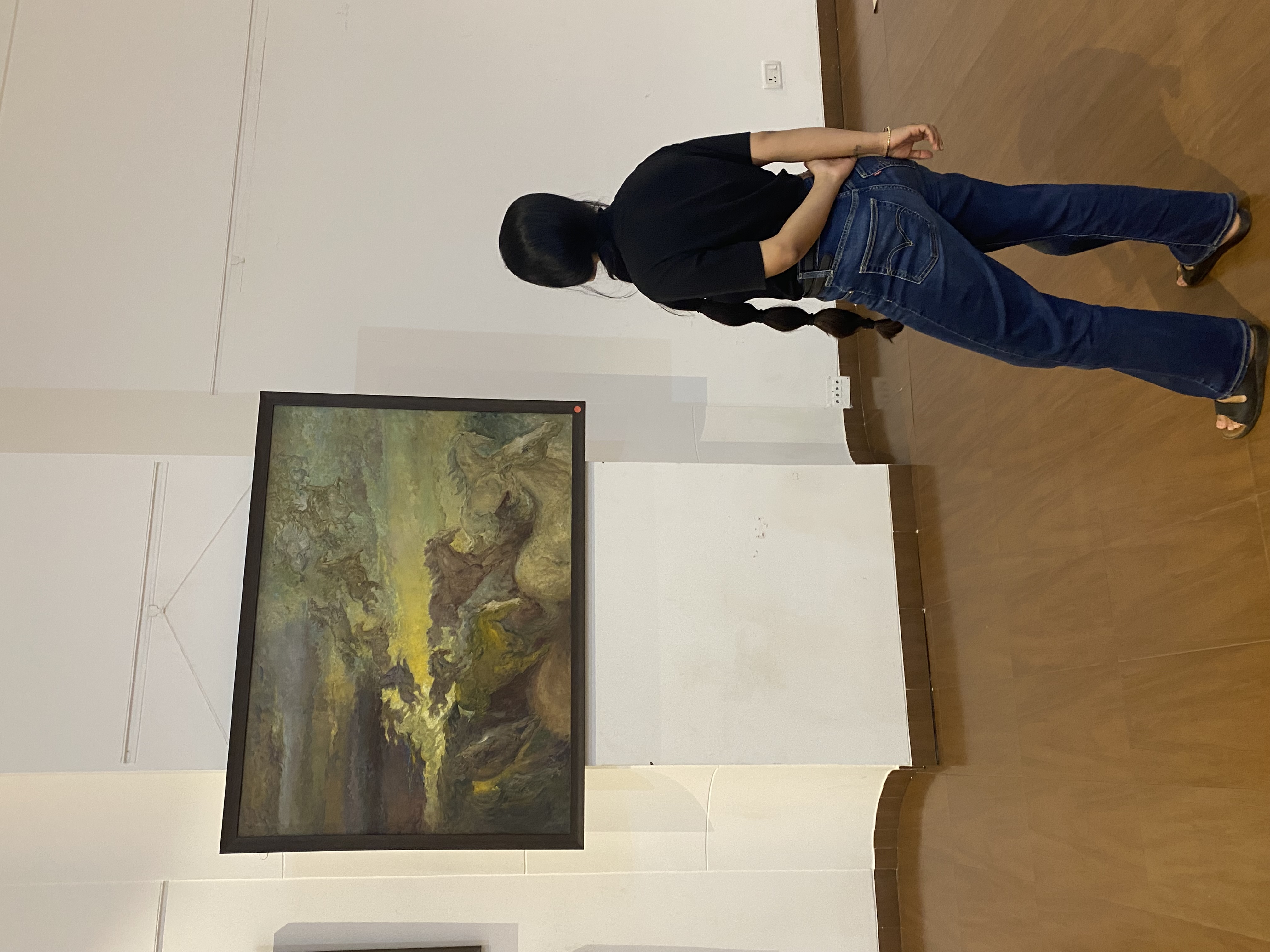
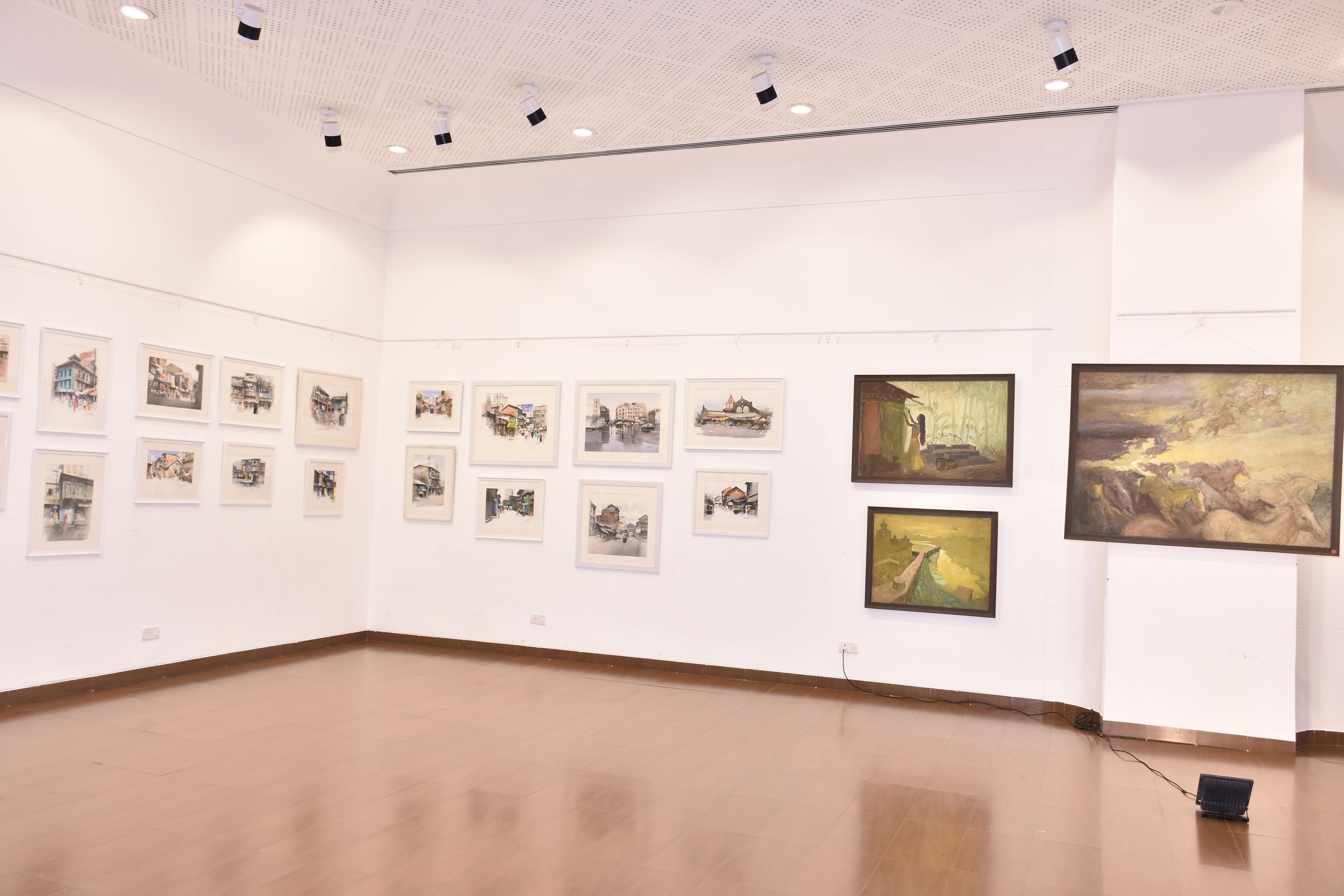
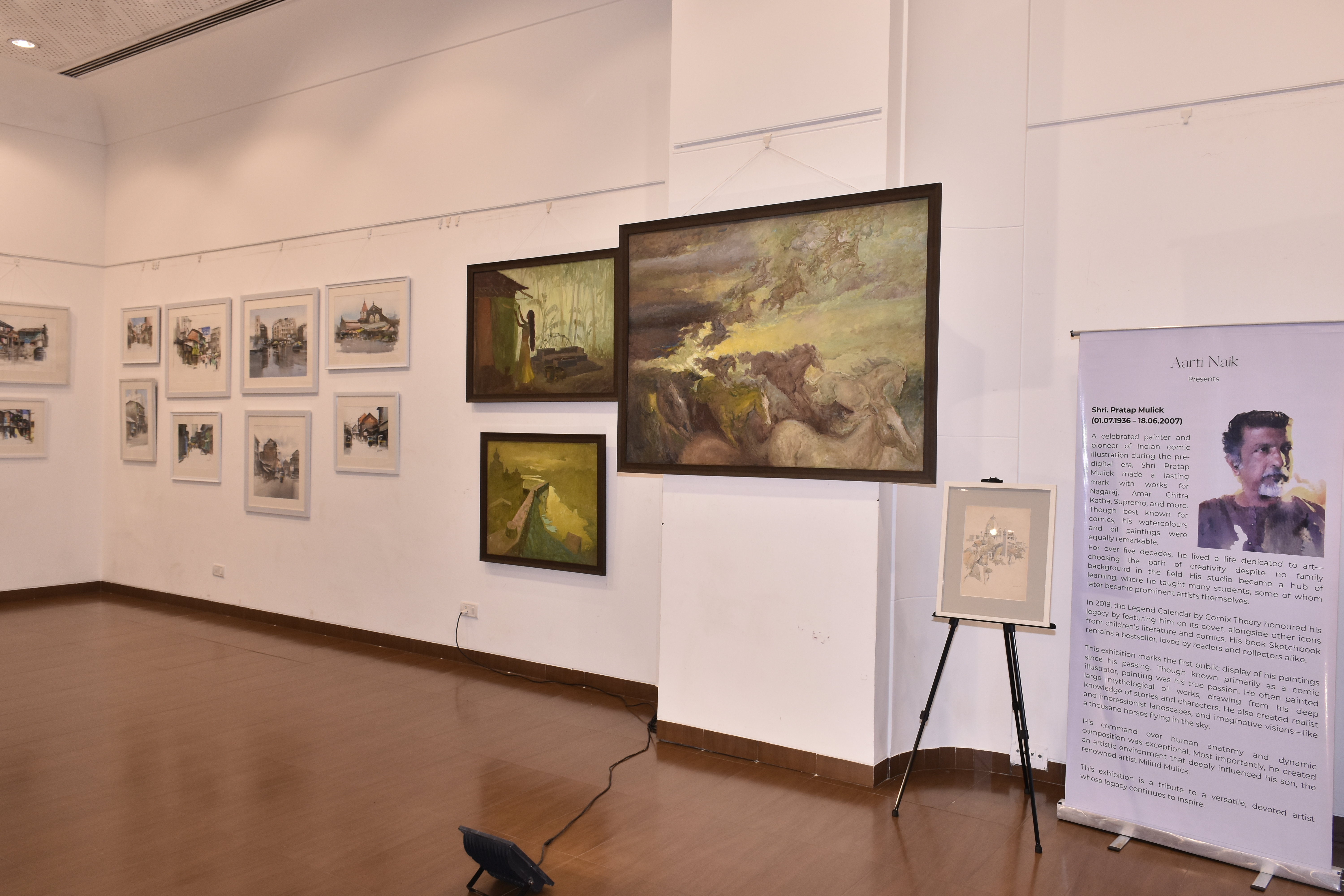
So instead of a path, we built a fixed point. Late Shri Pratap Mulick's four paintings, Horses Fantasy facing the entrance and sat at the centre. Every sight line from the door landed on them first. Mr. Milind Mulick's series filled the walls around them, grouped by place and medium. The visitor's route was their own. The room was arranged so that wherever they went, they had already met the centre.
Inside the hall
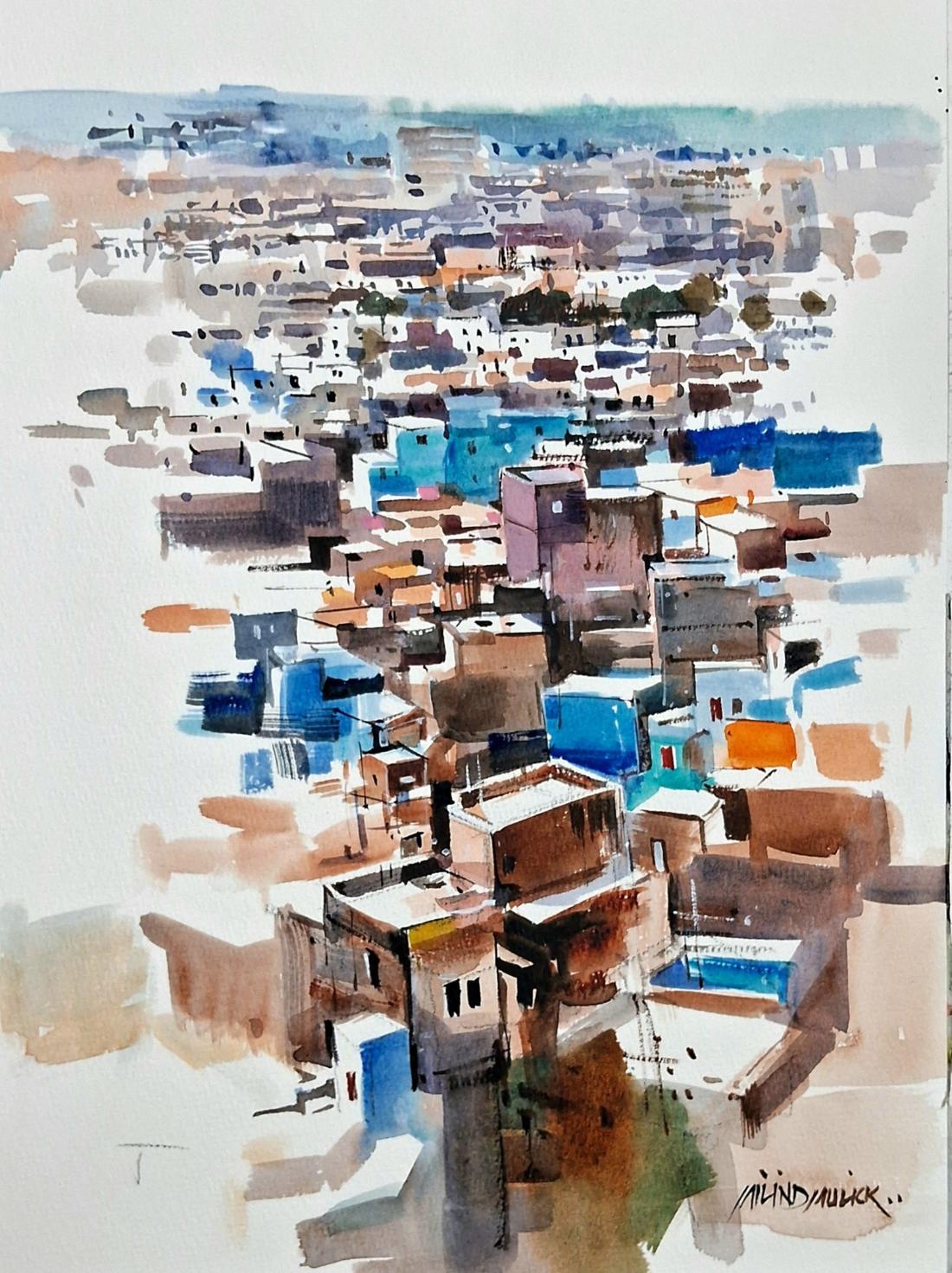
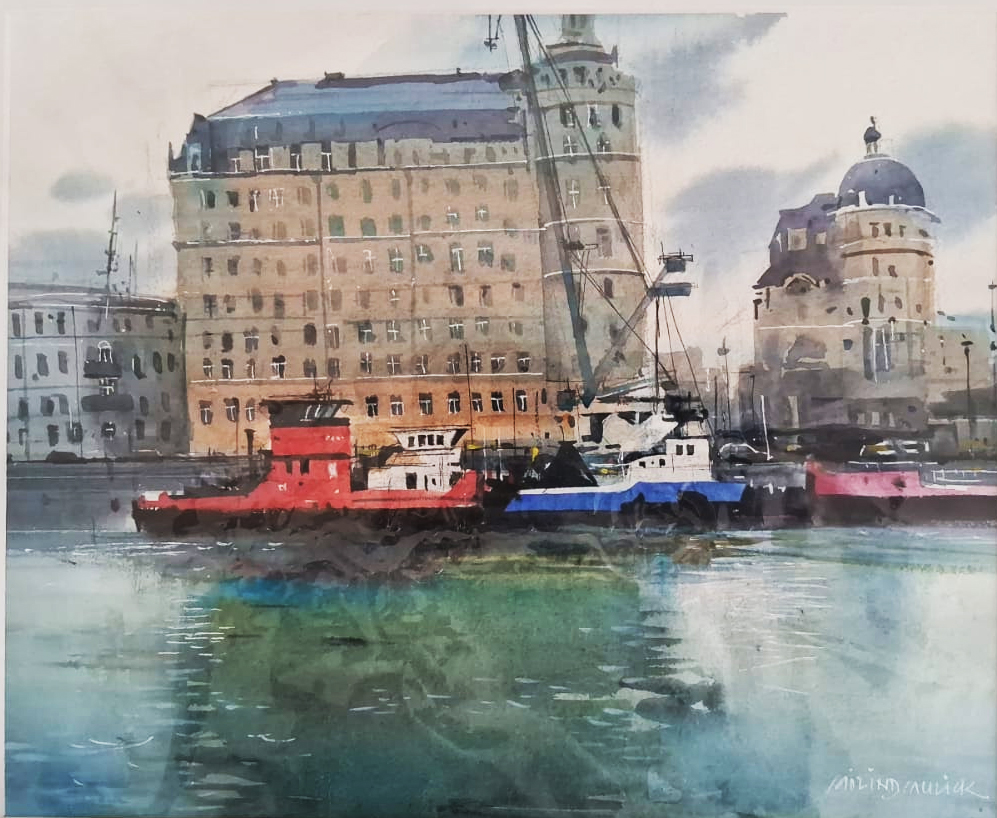
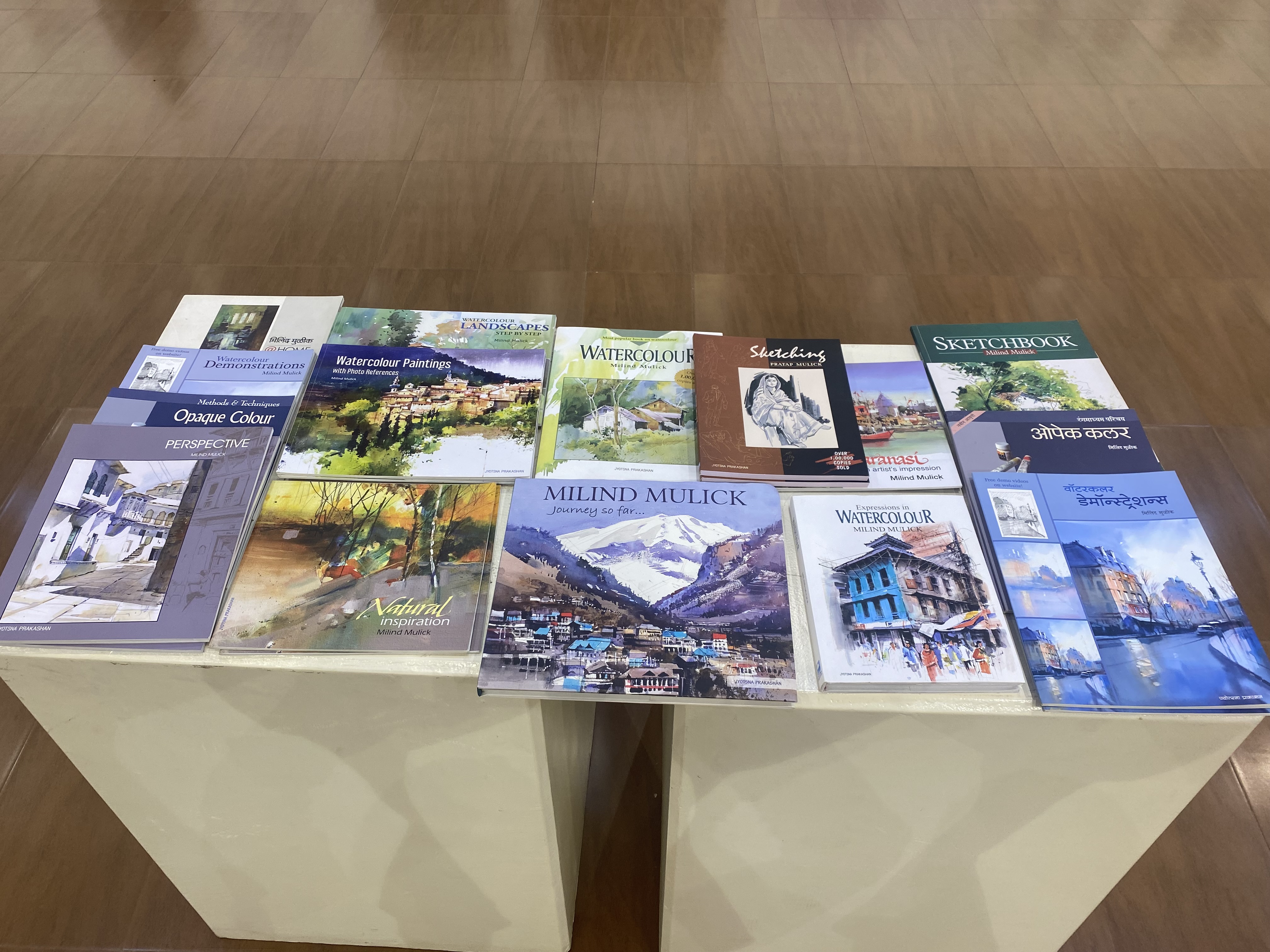
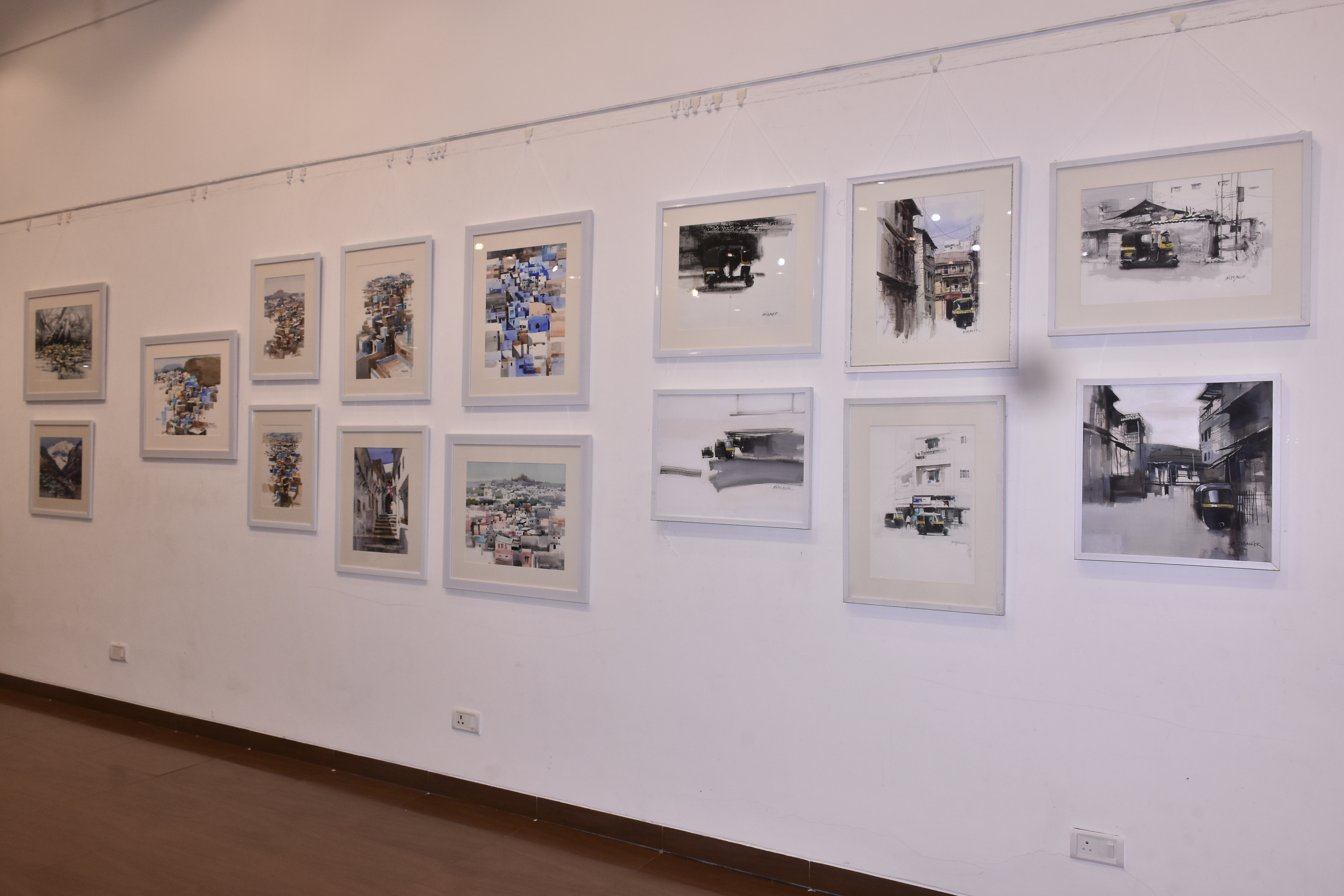
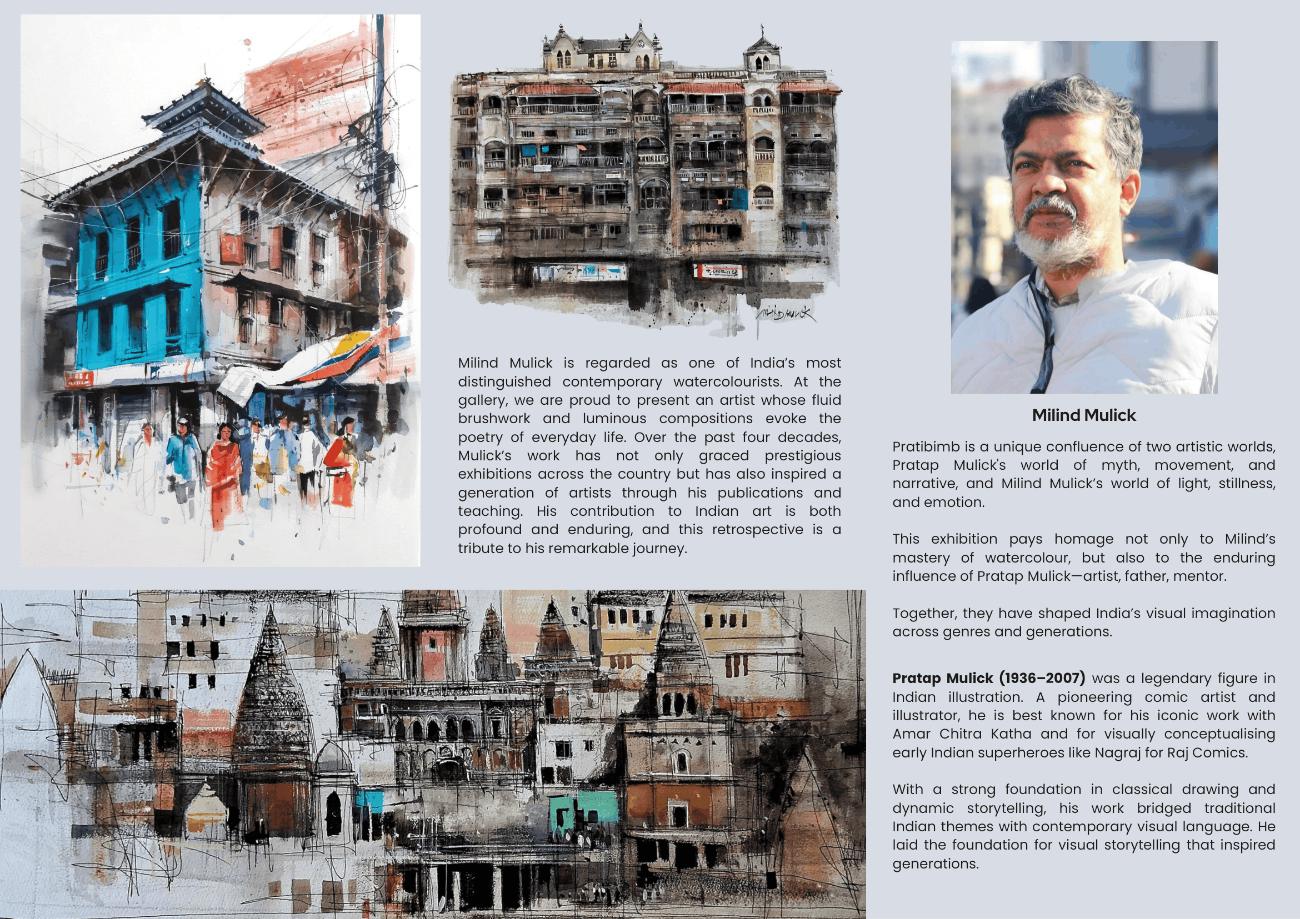
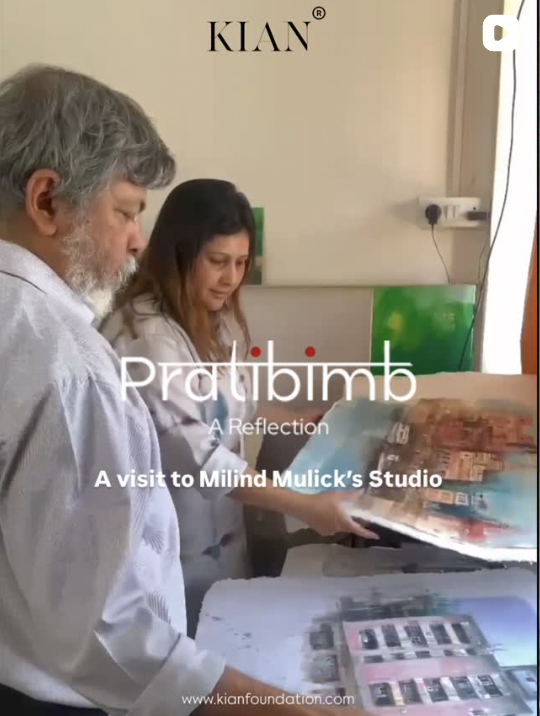
Mr. Milind Mulick's watercolours were grouped by series and place, the blue-city rooftops together, the market streets together, the Konkan villages together, so each cluster read as a journey rather than a wall of similar work. The auto-rickshaw studies, all in tonal grayscale, were set apart as a deliberate pause between the colour series. At the centre, Late Shri Pratap Mulick's four oils, Horses Fantasy facing the entrance, commanding the room from the moment you walked in. Alongside them, a curated body of around 30 artist books published by Jyotsna Prakashan, displayed and available for sale, titles that have shaped generations of Indian artists, and that I myself learnt from growing up.
A print system that carries the wash
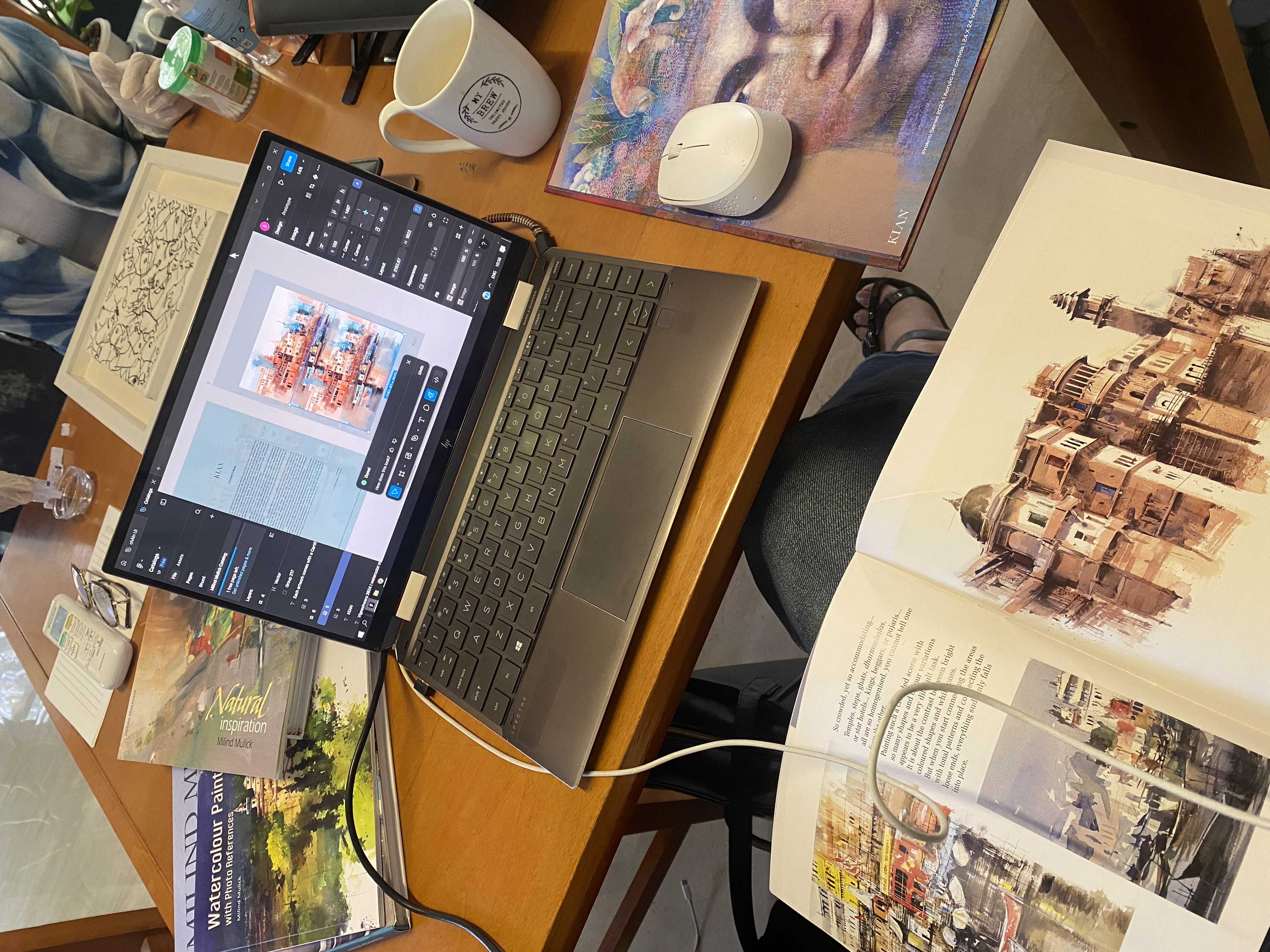
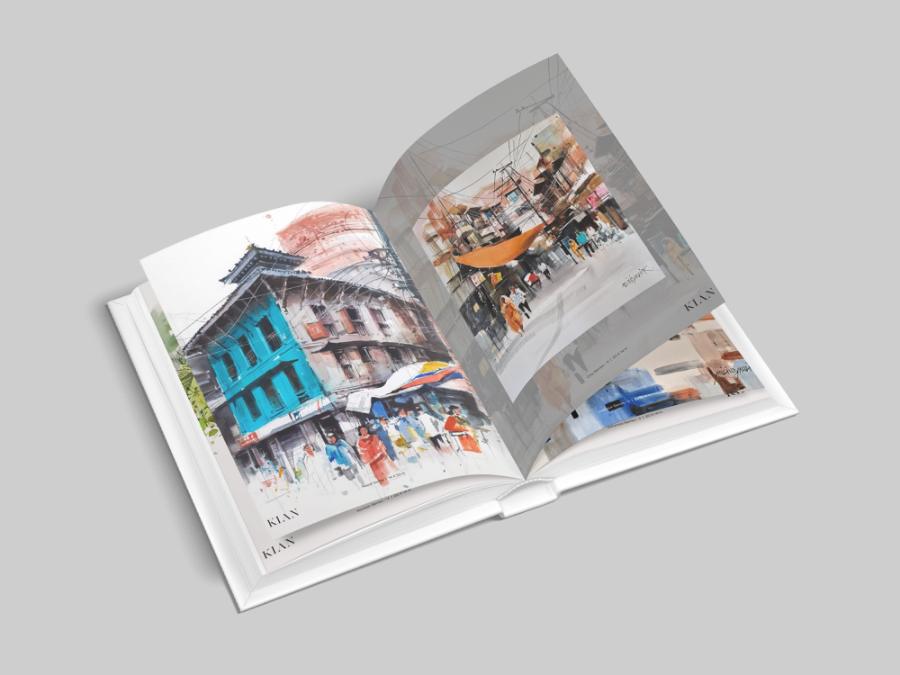
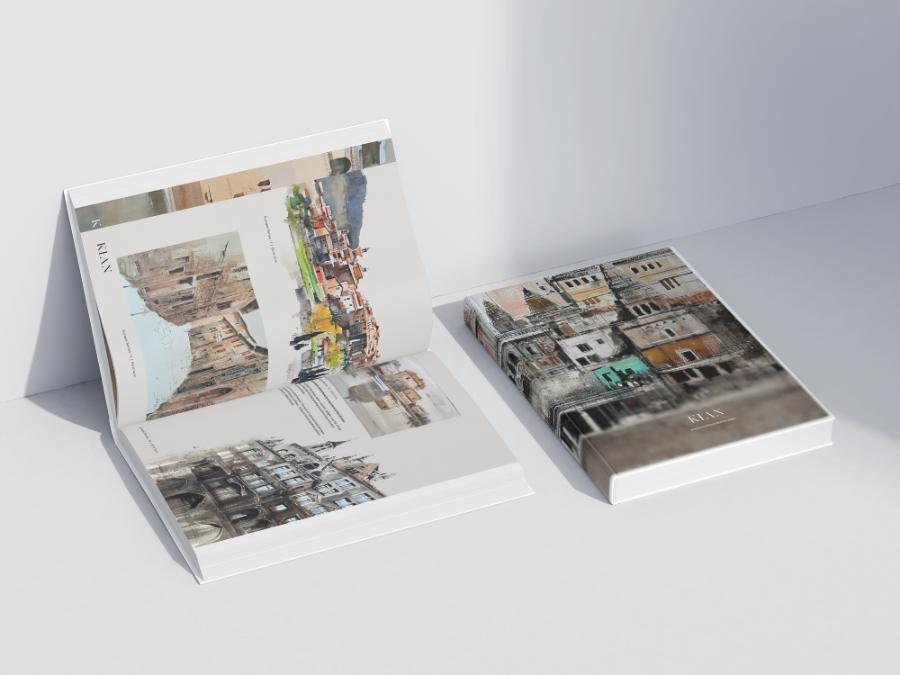
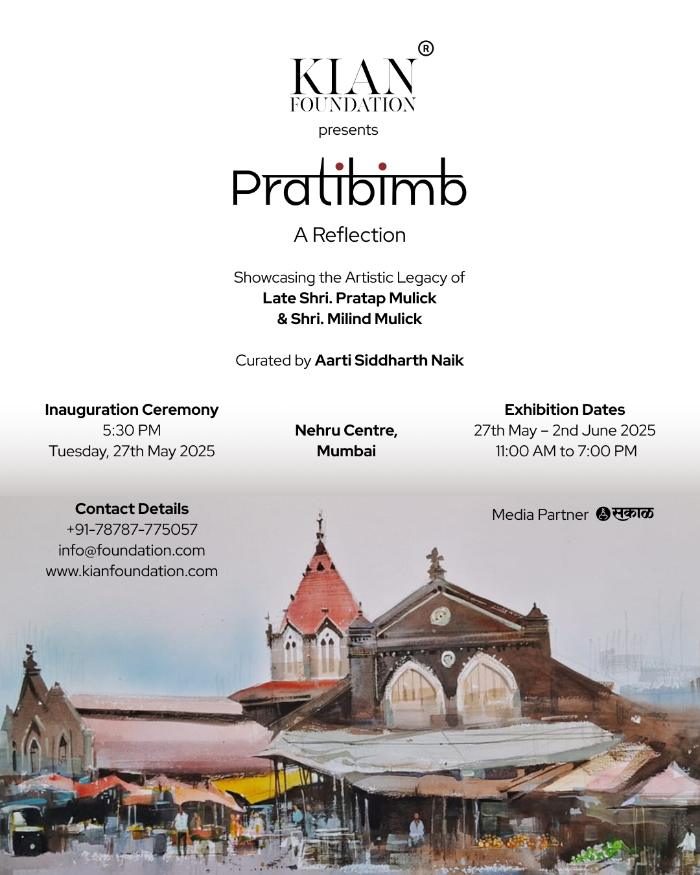
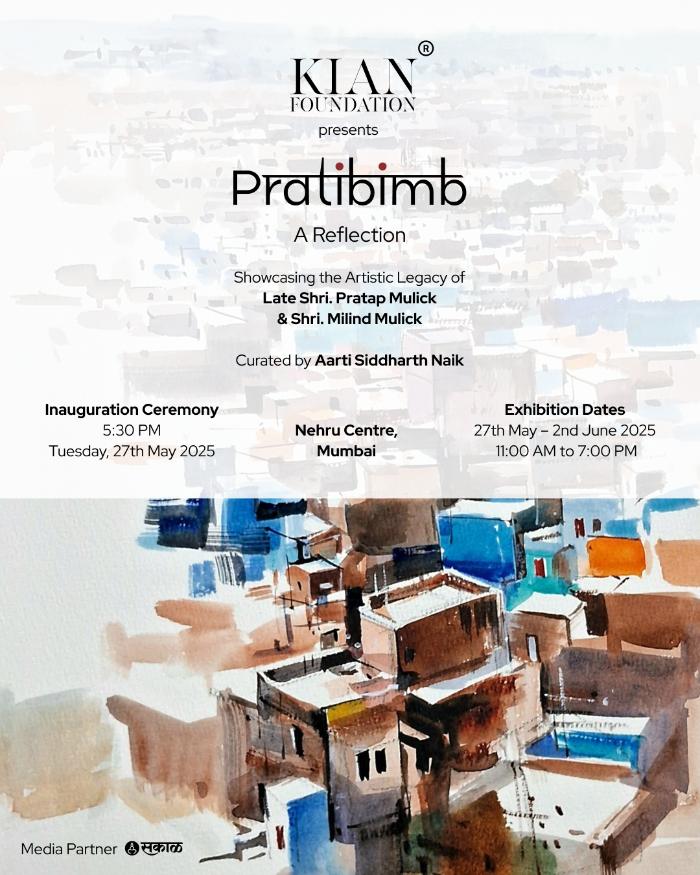
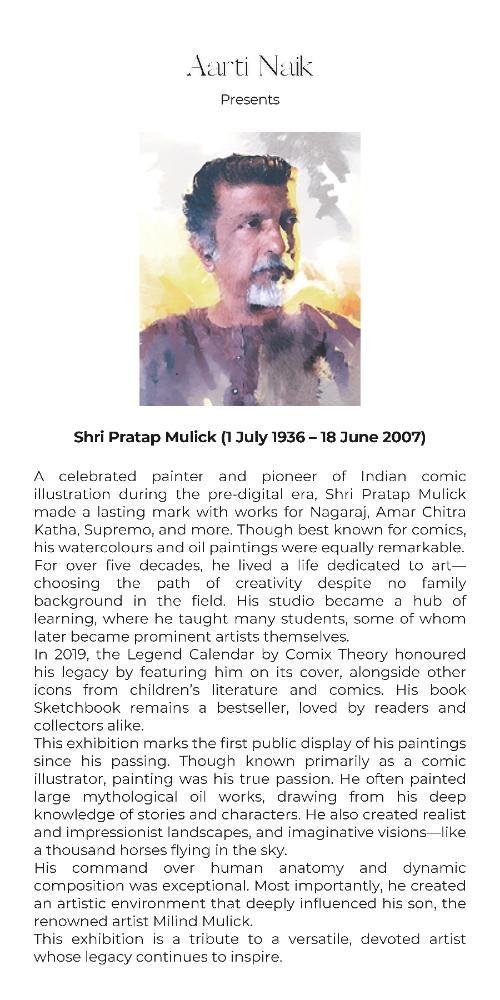
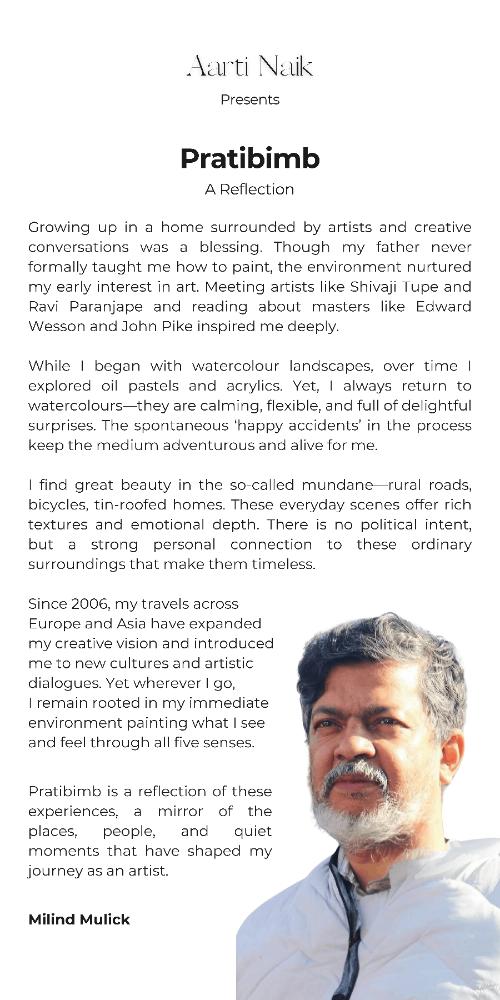
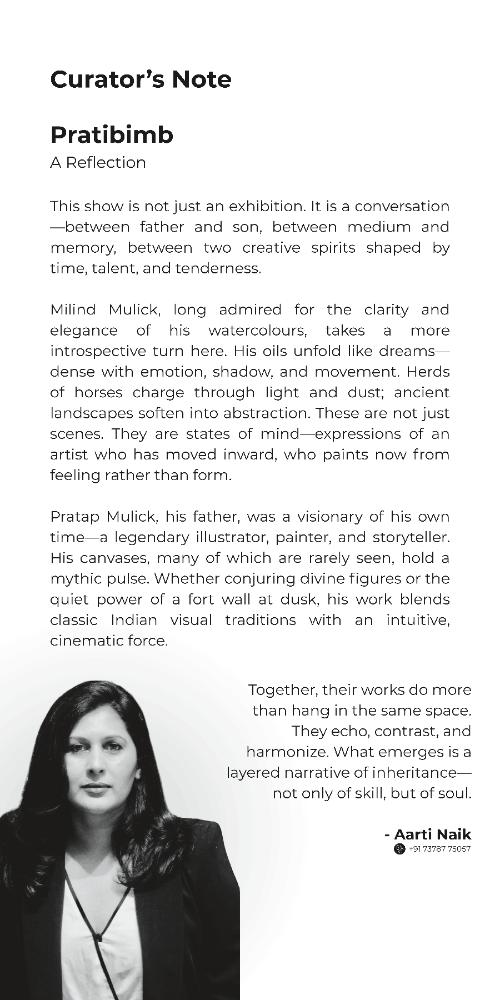
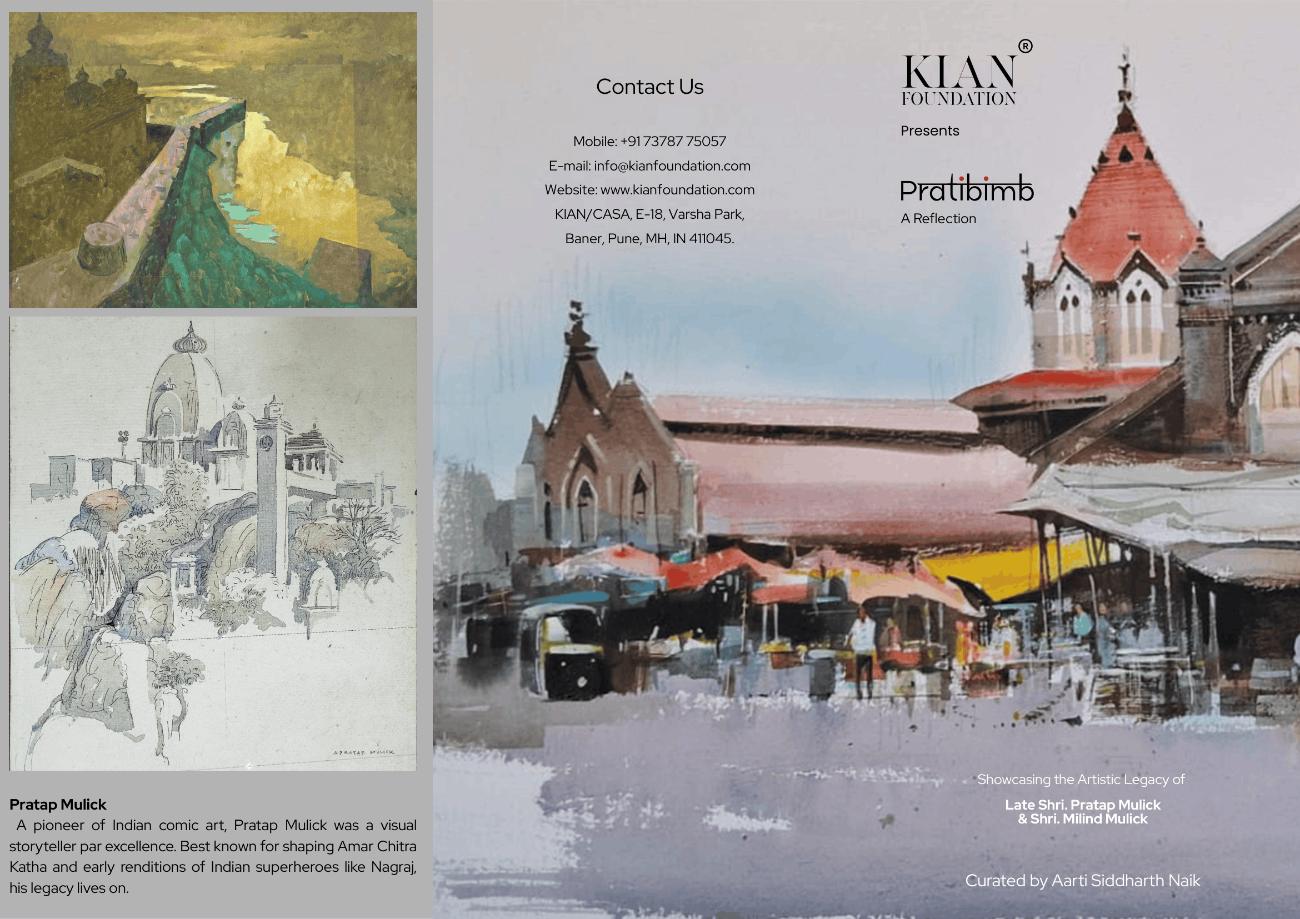
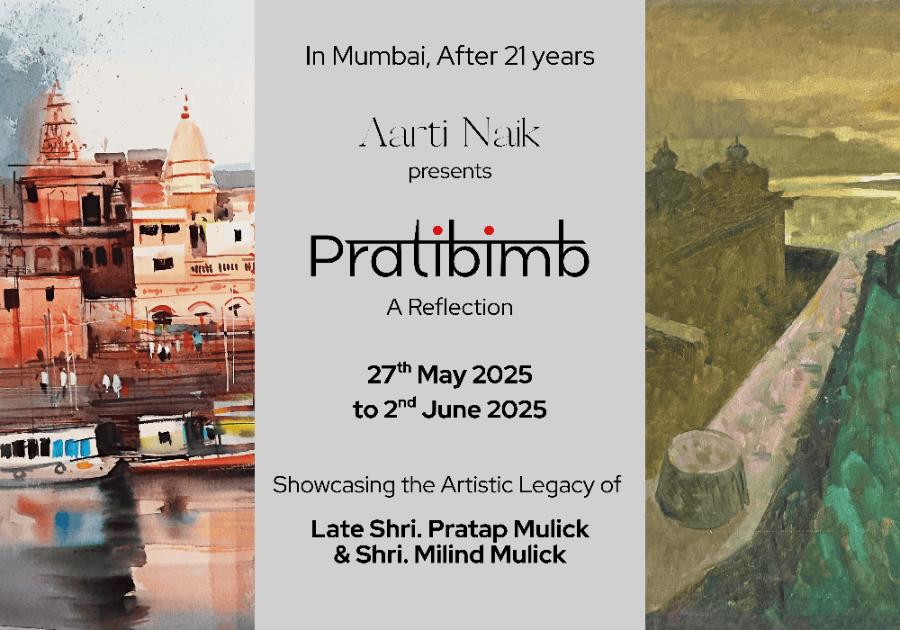
The catalogue and its full print family - invite, signage, posters, standees, wall labels - extended the same watercolour-led language onto every printed surface.
Red Hat Display throughout, 15 designs, 300 catalogue copies. One rule held it together: everything merges and flows, the way a wash settles into wet paper.








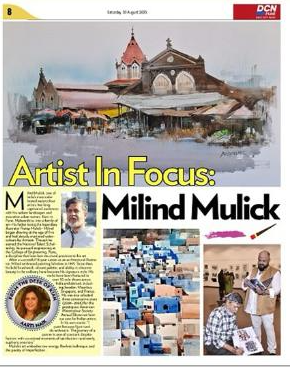
The numbers
Footfall from the daily gate register at Nehru Centre, which logged 2,000+ entries on each day of the run.
What I owned
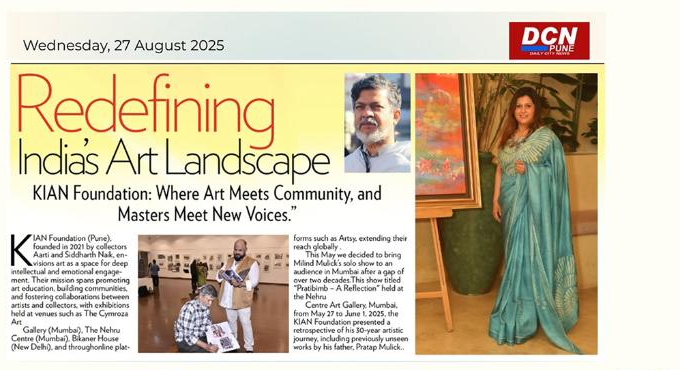
I came in as Manager & Creative Head in February 2025 to take on the hang, the full print family, the campaign, and the floor for all seven days.
Artist: Milind Mulick
What I'd do differently
The hardest part wasn't the design - it was running the floor and the show at once, selling from a room I'd arranged while two thousand people a day decided what to look at first. Arranging a hall you can't sequence is the same problem as a screen nobody scrolls in order: place the anchor, let the layout persuade.
Learn more about this project and the art collection at kianfoundation.com.